⭐ 4.9/5 · 143 Reviews — The honest framework for the most expensive roofing decision you will make — when to repair, when to re-roof, and when a new roof is simply oversell.
Repair if the roof is generally sound with isolated faults; replace if you have widespread nail sickness, failed underfelt, or repeated repairs no longer holding. The honest test is cost per remaining year of life. Roughly, once about 30% of the covering has failed, re-roofing beats patching. Free assessment — call 0116 319 1348.
✓ NFRC Registered
✓ Fully Insured
✓ 10-Year Guarantee
✓ Free Quotes
✓ No Hidden Costs
Honest advice
Do You Actually Need Roof Repairs?
Most Leicester roof problems announce themselves the same way — a damp patch, a dropped tile, or debris in the garden after wind. Here is how to tell a repair from something bigger.
A damp patch or brown staining on an upstairs ceiling after rain
One or more slipped, cracked or missing tiles visible from the ground
Debris — tile fragments or mortar — in the garden after high wind
Daylight visible through the roof from inside the loft
A single lifted ridge tile or a run of loose ridge mortar
When it is not the answer: If more than about a third of the covering has failed, or the fixing nails across a whole slope are corroding, repairing tile-by-tile is money wasted Read the full guide.
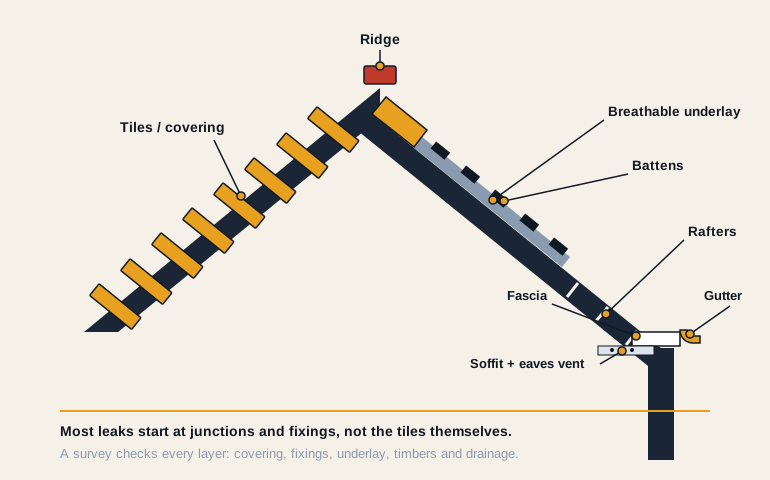
The anatomy of a typical pitched roof — the elements a repair survey checks.The process
What to Expect: Roof Repairs in Leicester
1. Free survey
We inspect the roof from ground and loft, and by drone where close access helps, to pin down the exact fault — not just the symptom.
2. Written itemised quote
You get a fixed written price within 48 hours, each element listed separately so you can see what you are paying for.
3. Scheduling
Most repairs are booked within one to two weeks; genuine emergencies are same-day.
4. The repair
We carry out the work, matching tiles and using correct lead and lime mortar on period stock.
5. Cleanup & sign-off
We clear all debris, leave the site tidy, and hand over the written workmanship guarantee.
Wet or high-wind days pause tiling and lead work — we build weather margin into every booking so a forecast does not leave your roof open.
Access
Access, Scaffolding & Permits in Leicester
Most Leicester repairs run from a tower or roof ladder; scaffold is quoted only where the job needs safe standing time at height. Scaffold is specified for: chimney-side repairs, full valley rebuilds, three-storey terraces, and anything beyond a day at height - always itemised in your written quote, never a hidden extra, and we arrange it.
Victorian terraces in Highfields and Belgrave mean rear-access scaffold and permit-controlled pavement space; the open post-war estates at Braunstone and Thurmaston are more straightforward to scaffold. Pavement scaffold and skip permits go through Leicester City Council; allow a few working days on streets like East Park Road, Narborough Road, the terraced streets off London Road where space is tight.
Pricing
Roof Repairs Prices in Leicester
Job
Typical range
Notes
Slipped or cracked tiles
£150–£400
Per visit, incl. access
Chimney flashing repair
£200–£600
Depends on flashing run
Single lead valley re-run
£400–£700
Code 4–5 milled lead
Full ridge & hip re-bed
£500–£900
Or dry-fix upgrade
Slope re-nail (nail sickness)
£300–£1,400
Single slope to full
What moves the price
Roof height and whether scaffold is needed
How many tiles or how much lead is affected
Matching tiles or lead on period stock
Ease of access on terraced streets
Whether timbers below are sound
Worked example: A 1930s semi in Wigston — three cracked tiles replaced, the front ridge re-bedded and a chimney apron flashing renewed — typically £550–£750, done in a day from tower access.
No deposit on repairs under £500. Larger repairs are paid on completion, nothing up front before materials are on site.
Covering LE1, LE2, LE3, LE4, LE5 and surrounding postcodes.
Guarantee
Your Guarantee, Explained
Workmanship on the repaired section is covered for 10 years in writing; any replacement tiles and lead carry their manufacturer warranties on top.
Covered: workmanship for 10 years, in writing, transferable if you sell.
On top: manufacturer warranties on materials (terms vary by product).
Not covered: storm or impact damage - that is an insurance matter, and we will document it for your claim.
If a fault appears in covered work, we come back and put it right. No quibbling, no re-charge.
Good to know
What It Is Like While We Work
A day of ladder or tower work and a small amount of tile debris — we sheet below the work area and clear everything before we leave. You do not need to stay home for external work - we just need power and access agreed in advance.
Repairs run year-round; temporary weatherproofing goes on the same day if rain stops work mid-job. Leicester’s inland Midlands position means wind-driven rain is the main roofing stress rather than coastal salt.
The decision
Should You Repair or Replace Your Leicester Roof?
This is the question that costs Leicester homeowners the most money when they get it wrong — either pouring cash into patching a roof that is finished, or being talked into a new roof they did not need. The good news is that the decision follows a clear logic once you know what to look at.
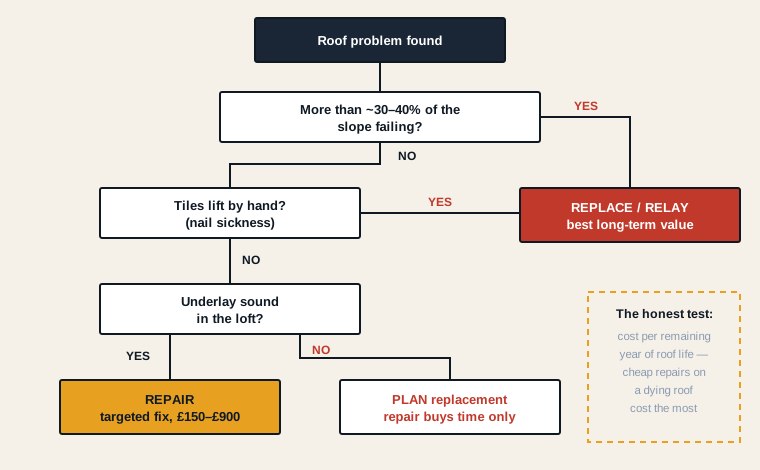
The repair-or-replace decision as a flow — extent of failure and remaining life drive the answer.
Repair when: the covering is broadly sound and the fault is isolated — a few slipped tiles, one tired valley, a single failed flashing. Replace when: failure is widespread — nail sickness across a whole slope, perished underfelt letting water bypass the tiles, repeated repairs that no longer hold, or visible sagging.
By Leicester stock era
How the Decision Plays Out on Leicester's Housing
Post-war estates (Braunstone, Eyres Monsell, Thurmaston, New Parks): the decision is almost always driven by nail sickness. Concrete tiles fixed with 1940s–70s steel nails start slipping across a whole slope simultaneously as the nails corrode. Once that has begun estate-wide, re-nailing buys time but a full re-roof is often the more economic ten-year answer.
Victorian terraces (Highfields, Belgrave, South Wigston, Clarendon Park): here it is the underfelt and the lead. Original bituminous felt perishes and century-old lead valleys fatigue. Isolated valley re-runs are a repair; but once the felt has gone and multiple valleys are failing, a re-roof with breathable membrane is the durable fix.
1930s semis (Oadby, West Knighton, Evington): ridge and hip mortar on its third cycle, plus ageing flat-roof extensions. Individually these are repairs; together, on a roof also showing tile wear, they tip toward replacement.
The economics
The Cost-Per-Remaining-Year Test
The single most useful way to decide is to think in cost per year of roof life bought. A £600 repair that gives you ten more good years costs £60 a year. A £9,000 re-roof lasting fifty years costs £180 a year — but buys certainty and a guarantee. A £4,000 repair on a roof that will still need replacing in three years costs over £1,300 a year and leaves you with an unreliable roof. Run the numbers and the honest answer usually reveals itself.
The 30% rule of thumb is the shorthand: once roughly a third of the covering has failed, patching around the failures is money wasted, because the areas you did not touch are next in line. Below that threshold, targeted repair is almost always the right, cheaper call.
Two honest warnings, both ways. Patching is money wasted when you are calling a roofer every year and the repairs no longer last — you are buying a re-roof in instalments without the reliability. Replacement is oversell when the covering is sound and one element has failed — a whole new roof to fix an isolated valley is exactly the kind of overselling that gives the trade a bad name. We will tell you plainly which side you are on.
RICS and BRE stock-condition guidance assess a roof on the proportion of the covering and structure that has reached end of life, not on isolated defects — the extent of failure, not its presence, drives the repair-or-replace decision. Source: RICS / BRE stock-condition guidance
Whether the honest answer is a targeted repair or a full re-roof, the workmanship carries a written 10-year guarantee, and the decision is always yours, made on clear information. A repair gets you a fixed fault and years more life; a re-roof gets you a new, guaranteed roof and the certainty that comes with it. We link this page from our roof repairs, roof replacement and roof inspection pages precisely because the decision should come before the spend.
FAQ
Frequently Asked Questions
Repair if the covering is generally sound with isolated faults — a few slipped tiles, one tired valley. Replace if you have widespread nail sickness, failed underfelt, repeated repairs that no longer hold, or sagging. The honest test is cost per remaining year of life: a £4,000 repair on a roof needing full replacement within three years is poor value against a re-roof lasting fifty.
A useful rule of thumb: once roughly 30% or more of the roof covering has failed — not just one patch — repairing tile-by-tile stops making economic sense, because you are patching around areas that will fail next. At that point a re-roof usually costs less over ten years than a run of escalating repairs.
Concrete interlocking tile lasts 40–60 years, clay plain tile 80–150 years, natural slate 80–150 years, and felt flat roofs 10–20 years. But the fixings and mortar often fail before the tiles — nail sickness on post-war estates and ridge mortar erosion on 1930s semis both bring forward the repair-or-replace decision.
Yes. If you are calling a roofer every year and each repair no longer lasts, you are spending re-roof money in instalments while still having an unreliable roof. Totting up three or four years of repairs against a single re-roof often shows replacement was the cheaper path all along.
When the covering is sound and only one element has failed. A single fatigued valley, one slipped-tile area, or a flashing fault does not need a whole new roof — that is oversell. An honest roofer fixes the actual fault. If anyone quotes a full re-roof for an isolated leak, get a second opinion.
Strongly. Post-war Braunstone and Thurmaston estates hit the replace decision through nail sickness across a whole slope; Victorian Highfields terraces through century-old lead and underfelt failure; 1930s Oadby semis through repeated ridge and flat-roof-extension problems. The dominant failure mode of your stock era shapes whether repair keeps working.
Book a free survey. We lift tiles to check fixings, inspect the underfelt from the loft, and assess the lead and mortar, then tell you plainly which way the economics point — including when a repair is the right, cheaper answer. Our survey fee for a formal report is credited against any work you book.
Get In Touch
Get an Honest Repair-or-Replace Assessment
Free survey, no call-out fee, and a straight answer on which way the economics point for your Leicester roof.